
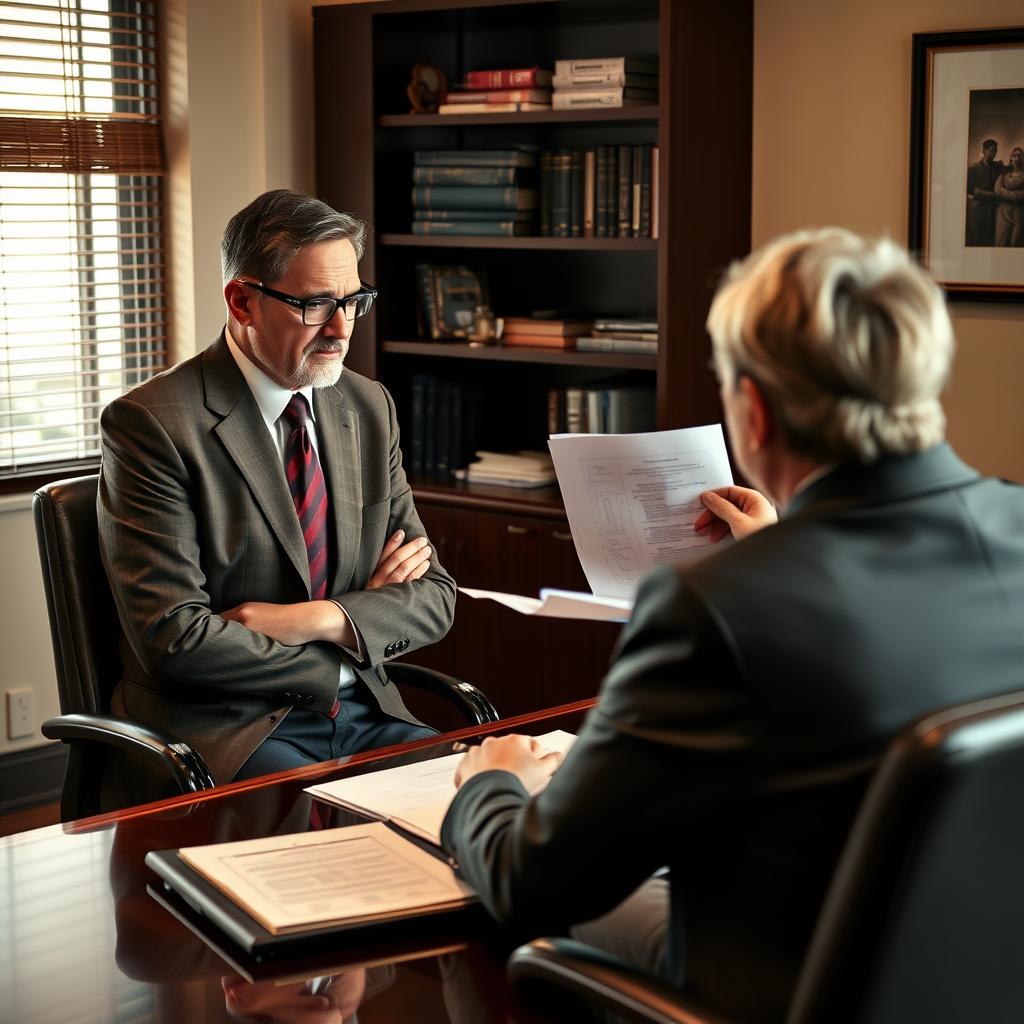
Refusal Lawyer Louisa County, VA
A breath‑test refusal charge in Louisa County, Virginia is not a routine traffic ticket. Under Virginia’s implied‑consent law (Va. Code § 18.2‑268.3), a person lawfully arrested for DUI is deemed to have consented to a chemical test of breath or blood. An unreasonable refusal to take the test triggers administrative and, for repeat offenses, criminal consequences. A first‑time refusal is a civil violation that carries a mandatory one‑year license suspension. A second refusal within ten years becomes a Class 2 misdemeanor, and a third or subsequent refusal is a Class 1 misdemeanor with potential jail time and a criminal record. Because refusal charges often accompany a separate DUI prosecution, the total exposure is serious. Law Offices Of SRIS, P.C., founded in 1997, represents drivers charged with refusal violations before the Louisa County General District Court at 100 West Main Street, Louisa. To discuss your situation, call (888) 437‑7747. Law Offices Of SRIS, P.C. — Advocacy Without Borders.
What Breath‑Test Refusal Means in Louisa County
Under Virginia law, a driver arrested for DUI on reasonable suspicion of alcohol or drug impairment is required to submit to a breath or blood test. Refusing to do so, however, triggers a separate administrative and criminal process. The Virginia implied‑consent statute makes refusal an independent violation, assessed on its own facts and with its own escalating penalties. In Louisa County, refusal proceedings are heard at the General District Court, the same court that handles reckless driving and DUI prosecutions. The Commonwealth must prove that the arresting officer had probable cause for the stop and the DUI arrest, and that the driver was properly advised of the implied‑consent law before refusing.
The practical effect of a refusal disposition extends well beyond the courtroom. A first‑time civil refusal results in a one‑year license suspension with no restricted‑license eligibility, unlike a DUI suspension that may allow limited driving privileges. A second or subsequent refusal within ten years becomes a criminal conviction with jail time, fines, and a permanent criminal record that may affect employment, professional licenses, and security clearances. Because the refusal finding can also be used as consciousness‑of‑guilt evidence in a parallel DUI prosecution, the two matters are tightly linked. Our firm approaches refusal cases with an eye toward safeguarding both the administrative license consequences and any related criminal exposure in the same jurisdiction.
How Mr. Sris and His Of Counsel Handle Breath‑Test Refusal Cases
Mr. Sris and his Of Counsel team begin by scrutinizing the traffic stop and the arrest. A refusal finding depends on a valid, lawful arrest for DUI. If the initial stop lacked reasonable suspicion, or if the officer lacked probable cause to arrest for impaired driving, the refusal charge may be challenged on constitutional grounds. The firm examines dashboard‑camera footage, body‑worn‑camera recordings, and officer reports to determine whether the implied‑consent advisory was accurately and timely given. If the advisory was improper—delivered after the fact, or without a valid arrest—the civil or criminal refusal count may be dismissed.
The team also evaluates the procedural validity of the refusal itself. A driver must be informed that refusal carries a separate license‑suspension and potential criminal liability. If the advisory was ambiguous, incomplete, or given in a language the driver did not understand, the refusal finding is vulnerable. In Louisa County, the Commonwealth’s Attorney has discretion to negotiate a resolution in appropriate circumstances, and Mr. Sris’s former‑prosecutor perspective informs that negotiation. One of the firm’s Of Counsel attorneys is a former Virginia State Trooper with 15 years of law‑enforcement experience, which provides a practical understanding of DUI and refusal enforcement protocols. The collective experience is directed toward achieving a disposition that protects the client’s driving record and, when possible, avoids a criminal conviction.
About Mr. Sris and His Of Counsel Team
Mr. Sris, Owner and Founder of Law Offices Of SRIS, P.C., has practiced in Virginia, Maryland, the District of Columbia, New Jersey, and New York since 1997. He is a former prosecutor with insight into the state’s evidence‑based charging decisions. Mr. Sris testified before the Virginia House Courts of Justice Committee in support of 2019 HB 635 (chief patron Del. David Bulova), demonstrating his engagement with the legal framework that governs the courts where he appears. His Of Counsel team includes attorneys with backgrounds as a former Maryland Assistant State’s Attorney and a former Virginia State Trooper, adding layers of perspective on how refusal and DUI cases are built and defended. Mr. Sris and his Of Counsel bring over 120 years of combined legal experience, supported by 4,739+ documented firm-wide results. Results may vary.
Frequently Asked Questions
What is breath‑test refusal under Virginia law?
Breath‑test refusal is a violation of Virginia’s implied‑consent statute that occurs when a driver lawfully arrested for DUI unreasonably declines a requested breath or blood test. A first refusal is a civil administrative violation with a one‑year license suspension, with no restricted‑license eligibility. A second refusal within ten years is a Class 2 misdemeanor, and a third or subsequent refusal is a Class 1 misdemeanor. The refusal charge is heard separately from the DUI prosecution, though the evidence may overlap. Because Virginia treats refusal seriously, counsel experienced with the procedural defenses available under Va. Code § 18.2‑268.3 is essential.
How can a lawyer challenge a refusal charge in Louisa County?
An experienced attorney can challenge a refusal charge by examining the validity of the traffic stop and DUI arrest, the sufficiency of the implied‑consent advisory, and any procedural defects in the refusal sequence. If the arresting officer lacked reasonable suspicion for the initial stop or probable cause for the DUI arrest, the refusal finding may be suppressed. The advisory must be given at the correct time and contain accurate information; an incomplete or misleading advisory can be grounds for dismissal. An attorney may also negotiate a resolution with the Commonwealth’s Attorney, particularly when there are mitigating factors or evidentiary weaknesses.
What are the penalties for a second refusal in Virginia?
A second refusal within ten years is a Class 2 misdemeanor under Va. Code § 18.2‑268.3, carrying up to six months in jail, a fine of up to $1,000, and an additional three‑year license suspension. The criminal conviction creates a record and may affect employment and security clearances. The Department of Motor Vehicles imposes the suspension separately and begins the suspension period upon conviction. Because the outcome can include incarceration, representation by counsel familiar with Louisa County General District Court procedures is important.
Do I need a lawyer for a breath‑test refusal in Louisa County?
Yes, an attorney is strongly advised, especially for a second or subsequent refusal. The penalties escalate quickly and can include jail time, a criminal record, and prolonged license loss. Even a first‑time refusal results in a one‑year suspension without a restricted license, which can severely disrupt work and family obligations. A lawyer can investigate the arrest, file appropriate motions, and appear at the Louisa County General District Court to advocate for the most favorable outcome under the specific facts of the case.
What should I do if I am charged with refusal in Louisa County?
If you are charged with refusal, contact a traffic‑defense attorney immediately and avoid discussing the facts of the case with anyone except your lawyer. Preserve any documentation related to the stop, including the citation, bail paperwork, and notes about the interaction. Do not post about the incident on social media. The timeline for court appearances is set by the General District Court, and a prompt consultation allows your counsel to prepare a defense strategy and, when appropriate, communicate with the Commonwealth’s Attorney before the arraignment.
For guidance on your specific situation, reach Law Offices Of SRIS, P.C. at (888) 437‑7747.
Attorney advertising. Prior results do not guarantee a similar outcome. Results may vary.
Case results depend on a variety of factors unique to each case.